

SOUL POWER AND THE ABA'S LASTING IMPACT ON THE NBA AND OTHER STRONG SHORT OPTIONS
Amazon Prime released a four-part docuseries titled Soul Power: The Legend of The American Basketball Association, directed by Kenan Kamwana Holley. Prior to watching the series, I had very little knowledge of the ABA. Sure, I may have played with the 60’s and 70’s All-Stars in NBA 2K, but I never knew the league's significance or how much it influenced the NBA we know and love today. Furthermore, this piece will analyze the ABA’s business strategy, player empowerment, and cultural influence in shaping the NBA we know today. Through the stories highlighted in the documentary, this piece will explore ABA’s business strategy, its role in empowering players, and its cultural impact on modern professional basketball.

The ABA was started in February of 1967 as an upstart league and gave off the impression that it would compete with the NBA. The league started with eleven teams. The league originally consisted of eleven teams divided into two divisions. The Eastern Division included the Indiana Pacers, Kentucky Colonels, Minnesota Muskies, New Jersey Americans, and Pittsburgh Pipers. Meanwhile, the Western Division consisted of the Anaheim Amigos, Dallas Chaparrals, Denver Rockets, Houston Mavericks, New Orleans Buccaneers, and Oakland Oaks. The upstart league created the three-point shot and even the 30-second shot clock.

To stand out, the ABA players used a red, white, and blue-striped basketball. The ABA style of play was fast-paced, reminding you of playing in the schoolyard. The NBA in the 60s, as you could probably imagine, resembled more of an opera than an actual physical professional contest that was entertaining. The ABA implemented halftime shows and giveaways, the kinds you would see in modern NBA games, to keep their audience entertained, literally doing anything to sell tickets and keep the league afloat.
What gets lost and is mentioned throughout part one of the documentary by countless interviewers is that the ABA’s plan was to merge with the NBA. There was no regard for the talent's future financial well-being. There was nothing set in place for the players post-acquisition.
Back then, an NBA franchise was worth roughly $1 million, whereas the entry fee to purchase an ABA team was $ 5,000, which would be $44,000 in today’s dollars. This low barrier to entry allowed the league to expand rapidly, adding teams and creating opportunities for players who may not have had a clear path to play professional basketball.

In turn, this made the acquisition of an ABA team attractive. Further, the ABA afforded many black men in the late 60s and mid-70s the opportunity to realize their dream of playing professional basketball. NBA Hall of Famer and ABA legend George Gervin made the point in the documentary that the ABA was the first integrated workplace. Although that statement may seem far-fetched, we have to remember that the country was undergoing significant changes, including the Civil Rights Act of 1964 and the Voting Rights Act of 1965. Even though those acts symbolized progress, you seldom had African Americans and white people interacting with each other in professional settings. Furthermore, the success of the ABA, like any business, revolved around talent, and if this upstart league were to “compete” with the NBA, it had to do whatever it takes to fill arenas and put the best talent on the hardwood.
The ABA was instrumental in empowering players to challenge the traditional talent system within professional basketball. NBA Hall of Famer Spencer Haywood’s decision to join the Denver Rockets in 1969 after his sophomore All-American season at the University of Detroit. Haywood’s decision forced the NBA to confront its restrictive eligibility rules. The NBA and the ABA required players to wait 4 years after graduating from high school before entering the league. However, Haywood was able to join the ABA under the league's hardship rule, which allowed players to join if they faced significant financial hardship. Haywood came from a family of sharecroppers in Mississippi, where they were barely getting by financially. So signing a six-year, $1.9 million contract was a no-brainer for Haywood. To say that Haywood outperformed his contract would be an understatement. In his first season in the ABA, Haywood averaged 36.4 points and 19.4 rebounds. He also won ABA MVP and ABA Rookie of the Year honors. You would think, given his performance, that Haywood's career in the ABA would be the start of a long career; however, he had issues with his contract and payments. Haywood eventually took these contract disputes to court; he told the New York Times he “kept asking” D. W. Ringsby, the club's president, “to show how the contract provides $1.9‐million.”
His contract was broken down into $51,000 a year for 2 years, then $75,000 a year for 4 years, with $10,000 a year invested over 10 years. Unfortunately for Haywood, before signing the contract, he did not understand what investment meant and felt he had been taken advantage of. When he brought his lawyer in to meet with Ringsby, Haywood expressed that he was met with a racial slur and told to leave his office.
Ultimately, Haywood would defect to the NBA, signing a contract with the Seattle SuperSonics. He would face pushback from the NBA due to its four-year rule after high school. Haywood sued the NBA, arguing that he had already been granted professional status by the ABA, and his case reached the Supreme Court. Haywood’s legal battle against the NBA eventually helped establish the hardship rule, which allowed underclassmen to turn professional (Applegate, 2006).

Would you think that, after Heywood’s situation, the ABA would strengthen its contract practices, right? Enter NBA Hall of Famer Kareem Abdul-Jabbar. Coming out of UCLA, Abdul-Jabbar was arguably the most decorated prospect of all time. He finished his college career with three consecutive NCAA championships, three Final Four Most Outstanding Player awards, and three Consensus First-Team All-America honors. He was also a two-time National College Player of the Year.
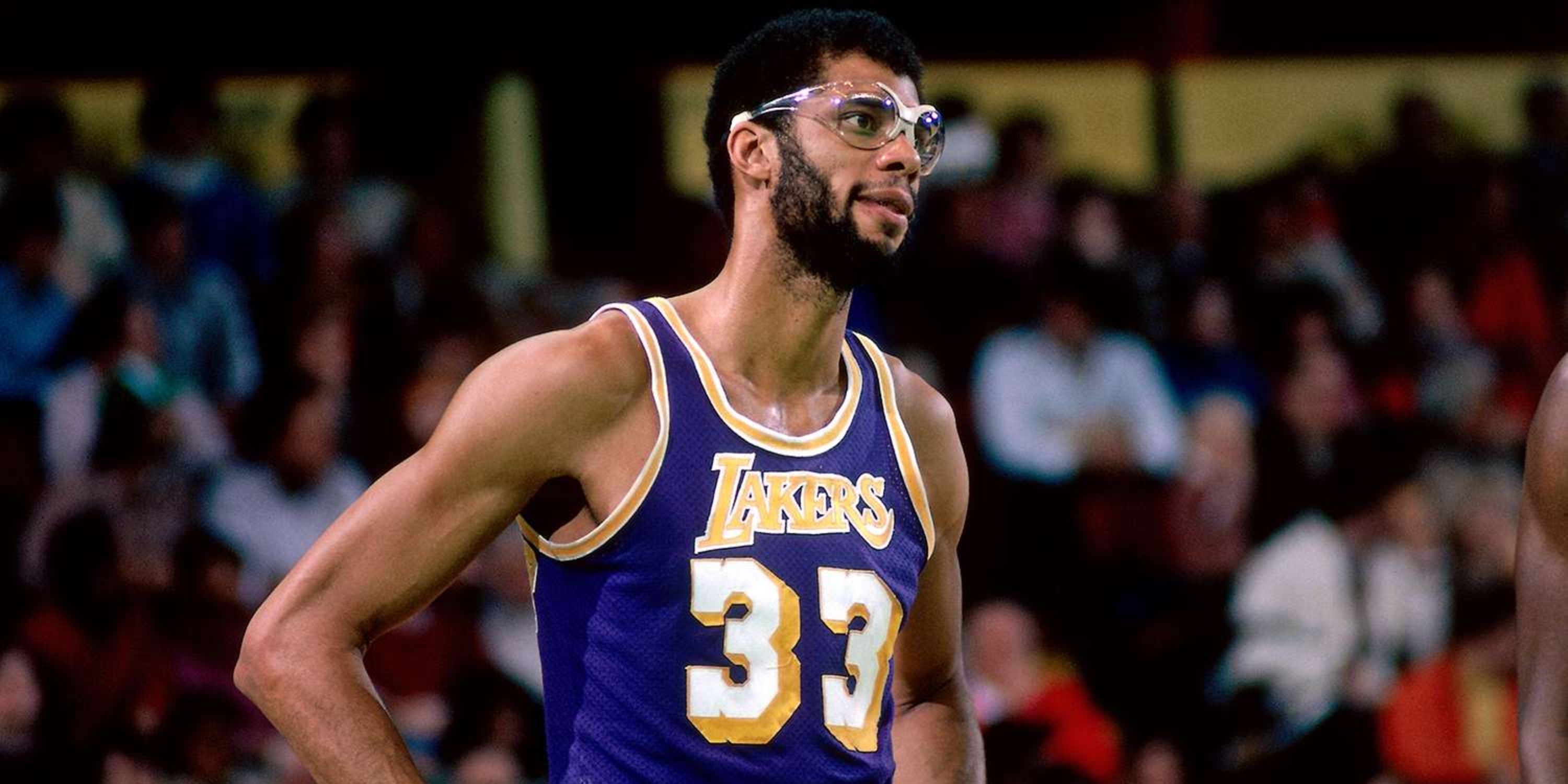
The ABA was determined to sign Abdul-Jabbar, and ABA commissioner George told the media they had a $1 million check for him as soon as he signed, and even tried to persuade Abdul-Jabbar to stay in his hometown of New York City to play for the New York Nets. When he received both offers from the ABA and the NBA, he elected to sign with the Milwaukee Bucks on May 5, 1969, for five years and $1.4 million. The New York Nets' offer was 3.2 million; Abdul-Jabbar reportedly gave the Bucks his word. According to Mikan, “One million was beyond anybody’s imagination,” Mikan said. “It was a shock when he turned us down and went to Milwaukee. We thought a million was a pretty good deal in 1968.”
For what it is worth, the ABA did provide an opportunity. The league opened doors for players, especially black athletes, during a time when those opportunities were limited, but the experiences of Spencer Haywood and Kareem Abdul-Jabbar also show how easily players could be undervalued or taken advantage of when it came to contracts and financial transparency. Even though the ABA folded, it forced the NBA to evolve and rethink both the entertainment and business sides of basketball. Furthermore, we still see those lessons today in the NIL era, where athletes can profit from their name, image, and likeness, but where understanding, contracts, representation, and personal value remain just as important as they were during the ABA’s rise.
Sincerely,
Ray Saturn
WORKS CITED
Applegate, D. A. (2006). The NBA gets a college education: An antitrust and labor analysis of the NBA's minimum age limit. Case Western Reserve Law Review, 56(3), Article 20.
https://scholarlycommons.law.case.edu/cgi/viewcontent.cgi?article=1661&context=caselrev
Haywood testifies Denver misled him on contract. (1971, March 17). The New York Times.
https://www.nytimes.com/1971/03/17/archives/haywood-testifies-denver-misled-him-on-contract-misled-on-pact.html
Jacobson, S. (1990, June 5). Mikan was the giant of his day. Los Angeles Times.
https://www.latimes.com/archives/la-xpm-1990-06-05-sp-570-story.html