

COLORISM IN THE BLACK COMMUNITY AFFECTS OUR MEN
Colorism refers to the prejudice or discrimination against individuals with darker skin tones, often occurring within the same ethnic or racial group. In the Black community, colorism has been a persistent issue for many years, and I can personally recall witnessing it growing up. For instance, people would often say, "Team light skin, we don't mess with those dark-skinned folks," or "Team dark skin, those light-skinned individuals are untrustworthy." Colorism in Black men's communities is the pattern of preferential treatment for lighter skin tones and Eurocentric features, often rooted in slavery, colonialism, and media/economic systems that rewarded proximity to whiteness. It shows up within Black communities and is also reinforced by outside institutions so that Black men can experience it as both "in-group bias" and "structural bias," sometimes at the same time. The effects aren't just about dating or beauty standards; they can shape opportunity, safety, credibility, and punishment across many careers.
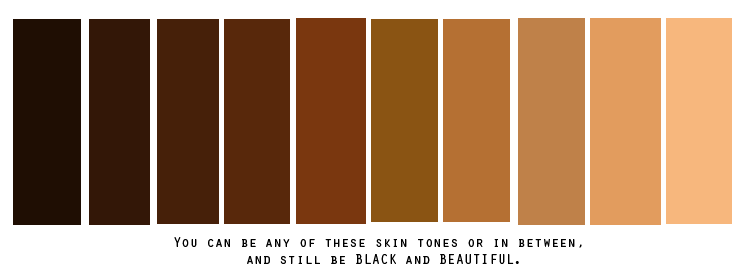
This problem is deeply rooted in various cultures, not just within Black culture, and has a long history. Within the Black men's community, colorism remains a significant ongoing challenge. We've seen this manifest in the entertainment industry, where some Black men receive more recognition, roles, and favorable treatment than others.
The important question remains: Why does this happen?
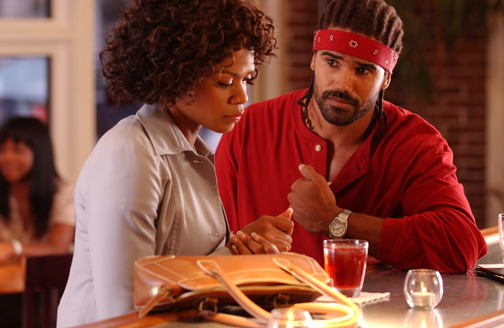
Why do people see color as something to define a person before they see their talent or how hard they work? Darker-skinned Black men are more likely to be perceived as "intimidating" or "aggressive," while lighter-skinned Black men may be seen as "safer" or "more palatable." Some people even view darker skin tone as ugly, dirty, and view it as something beneath them. Years ago, some people viewed lighter skin as being unfairly associated with being "clean-cut," "articulate," or "leadership material." Whereas darker skin can trigger bias that someone is less educated or more "street" than lighter-skinned people.

Colorism is still common today. I'm sure you have seen it before: the same actor keeps getting the same role for a person of color, while other actors who are more talented or equally talented aren't given those roles. Casting, branding, and "marketability" can skew toward lighter-skinned men or toward those with features deemed more broadly "acceptable." Whereas, darker-skinned men may be typecast into narrower roles and scrutinized more harshly for the same behavior. Colorism can affect media narratives, endorsement deals, and fan perception. Darker-skinned athletes may be more likely to be described with physicality stereotypes, while lighter-skinned athletes may get more "strategic" praise regardless of actual performance.

This is also very common in the workforce: hiring, performance reviews, "executive presence," and leadership pipelines can all be influenced. Lighter-skinned men may be perceived as a "culture fit" more readily, while darker-skinned men may be penalized for the same traits (directness, confidence) and watched more closely for mistakes. Colorism can also affect who gets high-visibility projects, mentorship, and sponsorship. This is something that I've seen in previous workforces I've personally worked in. In blue-collar workforces, such as customer-facing trades or workplace hierarchies, darker skin can trigger assumptions about criminality or trustworthiness among customers, supervisors, or security personnel. It can shape who gets promoted to foreman/lead roles, who is seen as "reliable," and who experiences more workplace surveillance or harsher discipline.
I also want to state that my article is showing colorism in general; light-skinned men face colorism as well. Lighter-skinned Black men may sometimes benefit from "palatability." Still, it can come with its own burdens: being questioned as "not really Black," pressured to prove authenticity, or used as a "safe" representative while darker-skinned men are excluded, some people even attack lighter skin men and say they don't understand how it feels to be treated differently, that they are not black enough, or that they would be treated better even in slavery. Colorism harms community cohesion by turning survival strategies into status hierarchies. It is an ongoing caste system within the community, something that should not be allowed to continue, but it will, as it is one of the things in history that the community refuses to let go.
Sincerely,
Kassandra Vivu
Author, Content Writer, Creator
WORKS REFERENCED
Bart-Plange, D.-J., & Trawalter, S. (2025). Gendered colorism: Evidence from social categorization studies. Social Psychological and Personality Science, 17(2). https://doi.org/10.1177/19485506251330355
Monk, E. P., Jr. (2021). The unceasing significance of colorism: Skin tone stratification in the United States. Dædalus, 150(2). https://www.amacad.org/publication/colorism-skin-tone-stratification-united-states
National Museum of African American History and Culture. (2019, January 10). How the camera sees color: Exploring colorism and identity in early Hollywood films. https://nmaahc.si.edu/explore/stories/how-camera-sees-color
Phoenix, A., & Craddock, N. (2022). Black men’s experiences of colourism in the UK. Sociology, 56(5), 1015–1031. https://doi.org/10.1177/00380385211069507
Reece, R. L. (2019). Color crit: Critical race theory and the history and future of colorism in the United States. Journal of Black Studies, 50(1), 3–25. https://doi.org/10.1177/0021934718803735
Reece, R. L. (2021). The missing social movement: Colorism in Black America. Interface: A Journal for and About Social Movements, 13(2), 293–311. https://www.interfacejournal.net/wp-content/uploads/2022/03/Interface-13-2-Reece.pdf
Uzogara, E. E. (2014). A comparison of skin tone discrimination among African American men: 1995 and 2003. Psychology of Men & Masculinity, 15(2), 201–212.