

BROTHERLY LOVE: HOW BROTHERHOOD IN SPORTS CAN BE VIEWED IN DIFFERENT WAYS
In men's sports, players are very passionate about their teams. They have trained together and spent countless hours together (Messner, 1992). With recent series surrounding sports that have been grabbing everyone's attention, named "Heated Rivalry," a series based on a book series written by Rachel Reid. Many are wondering whether the affection they've seen over the years was just athletes being passionate about their teammates, or something more.

Regardless of whether it's a deeper connection or just teammates being affectionate with one another, it doesn't have to be the sole focus. These are players who have trained hard together and independently, and have dedicated their lives to the sport. While representation is important (UNESCO, 2015) and seeing it can be uplifting, it shouldn't overshadow everything else. Many players, regardless of their sexuality, want to be recognized for their work, commitment, and effort—especially black men in sports.
It is important to respect players, regardless of the affection they show or share with their teammates. Assuming that something romantic is happening between players can create unnecessary pressure on both the individuals and the team. It may also lead players to feel that they should hold back on their affectionate behavior. Not only that, such assumptions can place unwanted scrutiny on someone's sexuality, which they may not be ready to confront.
So where do the lines get drawn? Where is the limit? Let players be affectionate with each other the way they want to express themselves. Black men in sports often face significant pressure to uphold a specific image, and this pressure is intensified for them (Anderson, 2011; Messner, 1992). They face outside pressures, but they also put a lot of pressure on themselves.
So just focusing on the sport and nothing else is more important than anything. You're focusing on the effort they put in, the training they do, and their feelings toward the sport, and you're supporting them, regardless of whether teammates are seen as affectionate with each other or not. That's what sports are supposed to be about: the work of the teammates and the game itself. Sports are not only important for entertainment, socialization, brotherhood, and playership; they also give a sense of purpose (UNESCO, 2015), and players look forward to embracing that purpose on the field.
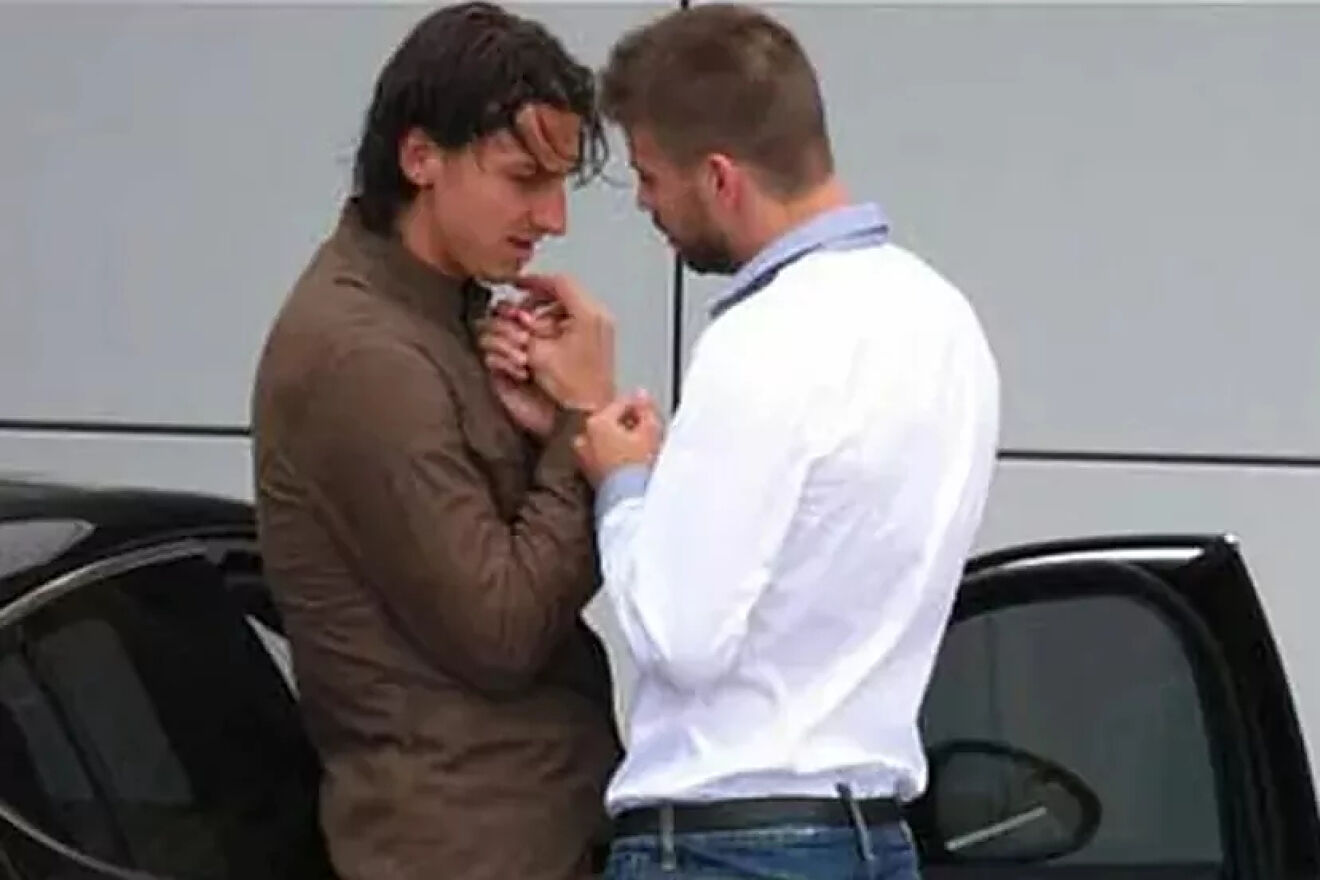
Although that is the importance of sportsmanship, some fans often joke or speculate that certain professional soccer players are more than just regular teammates I mentioned above. This has become very popular on social media. Some of these famous pairs are Gerard Piqué and Zlatan Ibrahimović, Marcos Llorente and Ferran Torres, Lionel Messi and Sergio Agüero, and Son Heung-min and Harry Kane. This has nothing to do with the sport, but representation matters (NCAA, 2023; IOC, 2021), and also people who support the LGBTQ community love to see others similar to them in certain positions, not only in sports but also in the military, lifestyle, political positions, and more. Seeing someone like you in a sport you enjoy is refreshing. Knowing that there is someone who can relate to you in a sport you enjoy, and that they are also passionate about the sport they play.
Although clickbait and new social media trends may be popular, it's important to recognize when they go too far. Many team members have shared their opinions on the matter; some are okay with it and don't mind, while others find it concerning and feel uncomfortable, reflecting broader discussions about fan culture and athlete privacy (Cashmore & Cleland, 2012). It is important to take a step back and realize that when it comes to sport, the main priority should be the sport and players' sportsmanship and nothing else, but I must admit. It is very nice to see that, no matter their sexuality, the players are affectionate not only with each other but also with their team and the sport they love.
Sincerely,
Kassandra Vivu
Author, Content Writer, Creator
WORKS REFERENCED
Anderson, E. (2011). Inclusive Masculinity: The Changing Nature of Masculinities. Routledge.
"HEATED RIVALRY" (2025). https://www.imdb.com/title/tt35495073/. July, 17, 2026.
Cashmore, E., & Cleland, J. (2012). Fans, homophobia and masculinities in association football: Evidence of a more inclusive environment. British Journal of Sociology, 63(2), 370–387.
"Gerard Pique and Zlatan Ibrahimovic" (2017) "Gerard Piqué clarifies controversial photo with Zlatan Ibrahimovic taken 13 years ago" LW. LaLiga. https://www.marca.com/en/football/spanish-football/2023/03/02/64002d3622601dfb5c8b4578.html
International Olympic Committee. (2021). Framework on Fairness, Inclusion and Non-Discrimination on the Basis of Gender Identity and Sex Variations.
Messner, M. A. (1992). Power at Play: Sports and the Problem of Masculinity. Beacon Press.
National Collegiate Athletic Association. (2023). LGBTQ Resources.
UNESCO. (2015). Quality Physical Education (QPE): Guidelines for Policy-Makers.